Every Maltese boat owner knows the morning after a xlokk: a fine red-brown film over everything, sometimes baked on by a shower of “mud rain”. The instinct is to wipe it off. That’s exactly what scratches the gelcoat.
Why wiping it off does damage
Saharan dust is a very fine mineral powder. Wiped dry, or with too little water, it acts like a polishing compound and leaves fine scratches in gelcoat, varnish and clear plastic windows. On teak it works into the grain; on canvas it sits in the weave and holds moisture.
The right way to clean it
Start with a lot of fresh water and no contact: rinse from the top down to float away as much dust as possible before anything touches the surface. Then wash with a pH-neutral boat soap and a soft brush or wash mitt, rinsing the mitt often so you aren’t dragging grit around. Rinse again thoroughly.
For teak, scrub across the grain gently with a soft brush and plenty of water — never a pressure washer. For canvas, rinse, wash gently with a mild cleaner and let it dry fully before stowing. For stainless steel and deck hardware, rinse well; dust trapped with salt in fittings speeds up tea-staining. Clear windows should only ever be rinsed and washed with plenty of water and a soft cloth.
Keeping it off
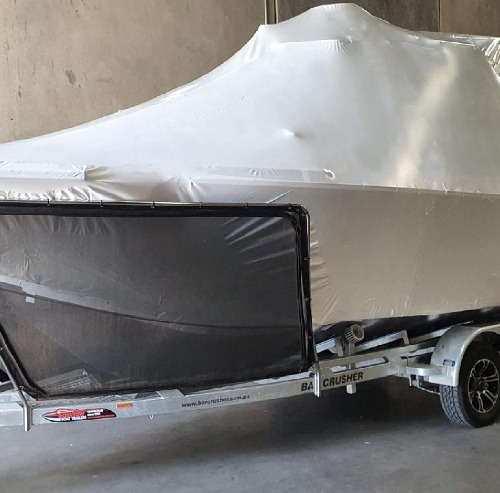
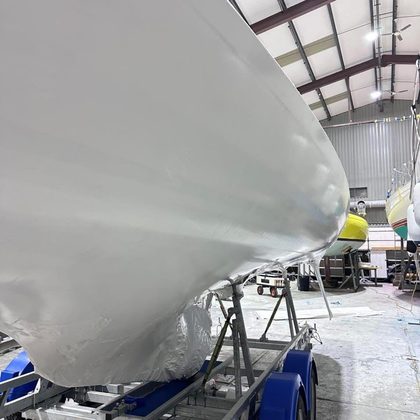
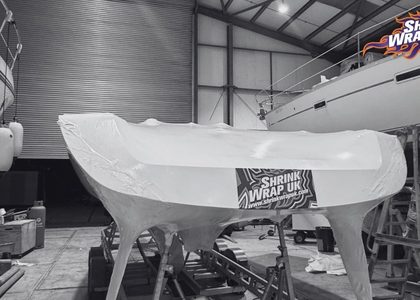
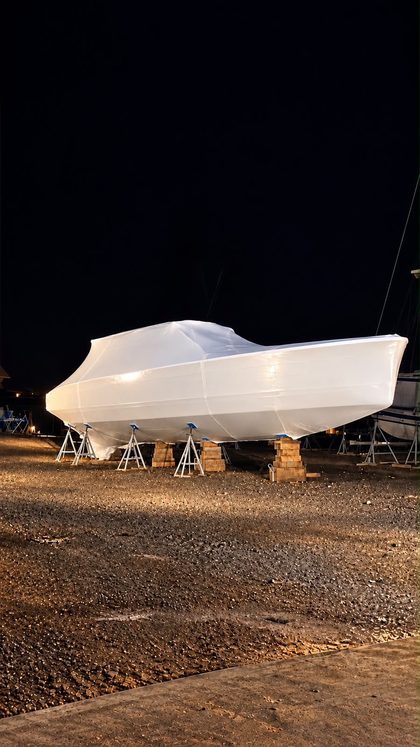
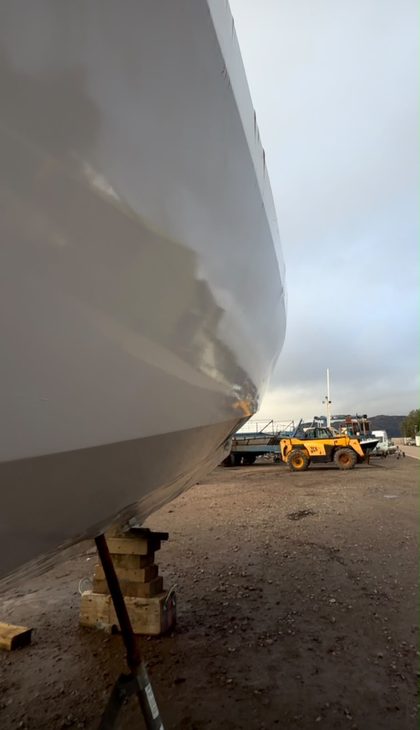
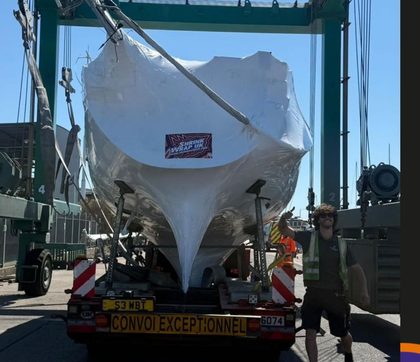
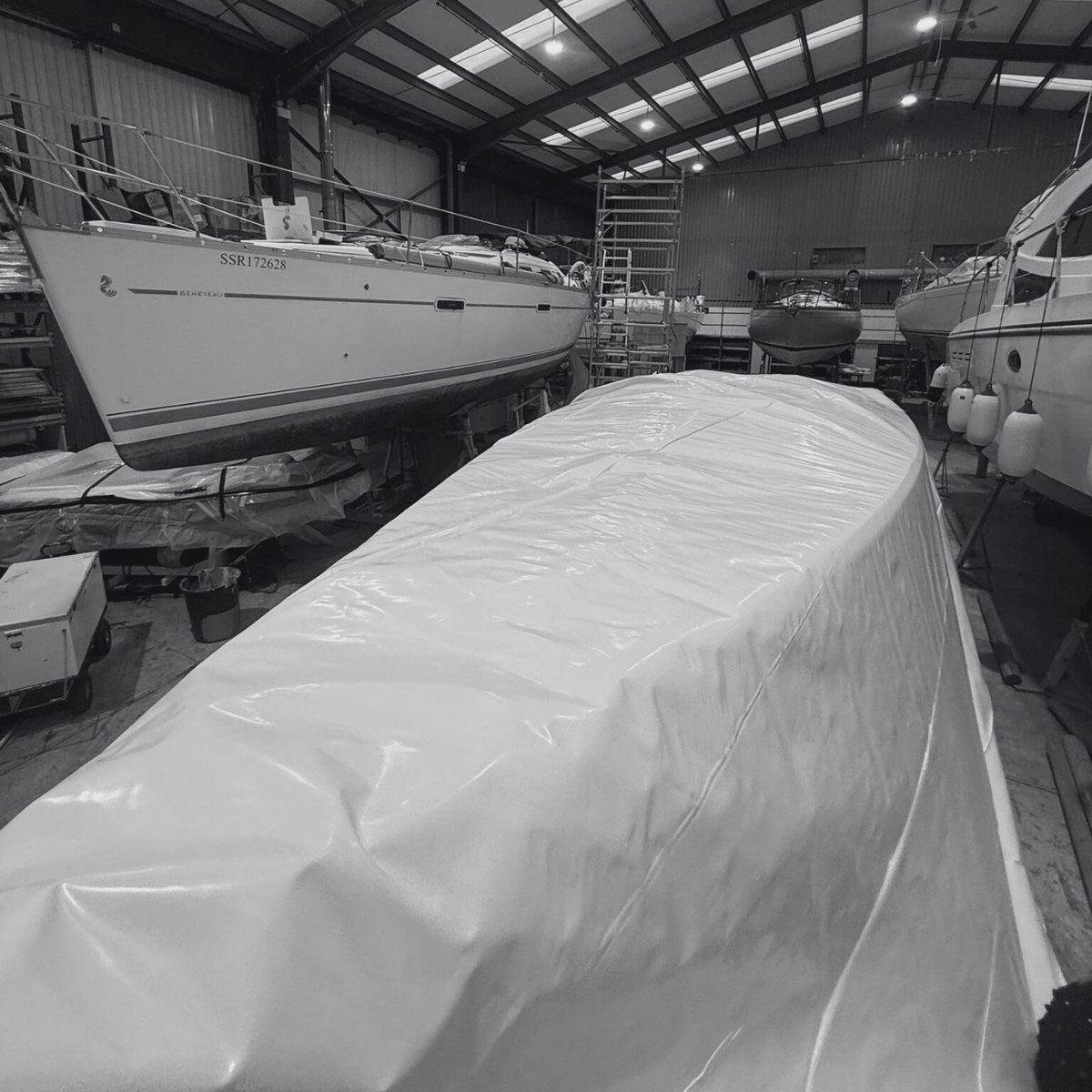
For a boat in use, the best you can do is rinse promptly after every dusty spell. For a boat that isn’t being used, a cover changes everything: a sealed shrink wrap cover takes the dust instead of the boat, and when it comes off, the dust goes with it.