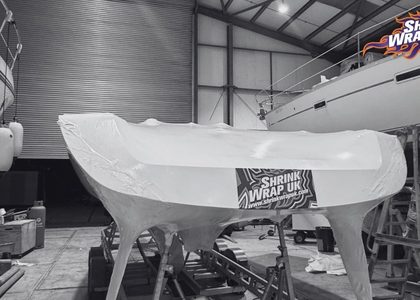
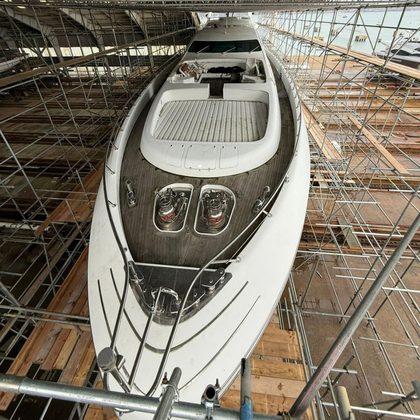
Start with the work, not the boat
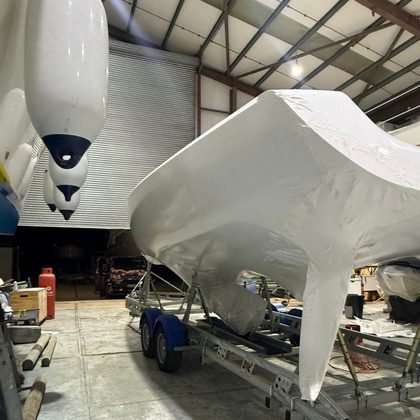
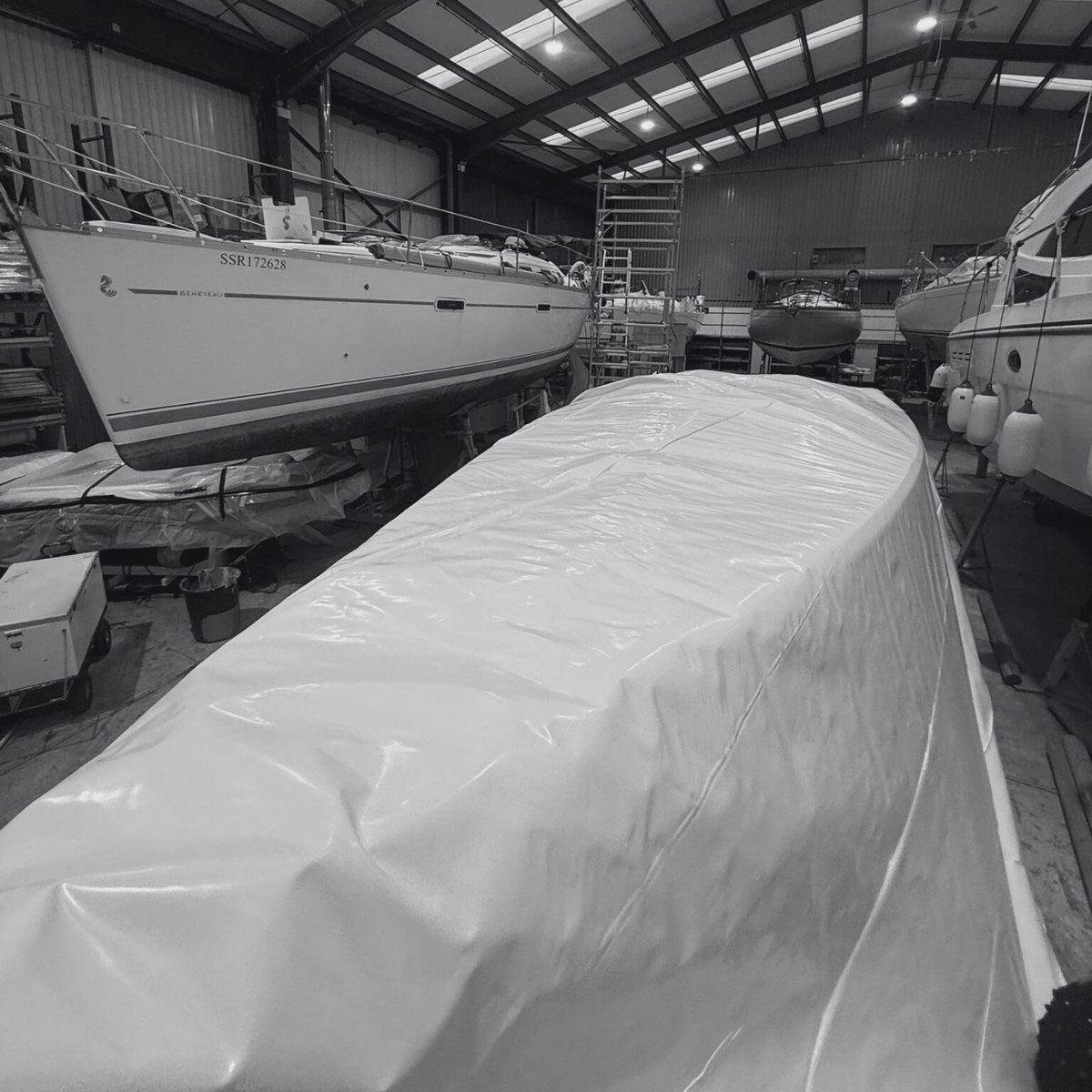
An enclosure is a workspace. The question isn’t how big the boat is but what is going to happen inside it. A topside respray needs staging along both sides and room to move with a spray gun. Antifouling needs access right down to the keel and the stands. Blasting needs a sealed base and controlled entry. A spot repair might only need a box around the transom.
Talk to whoever is doing the work about their staging, their equipment and how many people will be inside at once. That sets the height, width and length of the enclosure far more than the boat’s dimensions do.
Access, extraction and light
Plan the door first: where materials arrive, where people go in and out, and whether a door needs to be big enough for a lift or a pallet. Then extraction: spraying needs somewhere for fumes and overspray to go, so agree where the extraction ducts enter and leave the enclosure and build ports for them.
White film lets a lot of daylight through, which is often enough for preparation work. Painters usually want additional lighting for colour and finish — plan cable entry points for it rather than running leads under the edge of the film, which breaks the seal.
Sealing the base
Most dust escapes at ground level. A good enclosure is sealed down to the hard standing, with the film weighted or fixed so it can’t lift. This matters most for blasting and for sanding antifouling, where the waste is both messy and something the yard will want contained and collected.
Working with the yard
The yard sets the rules: where enclosures are allowed, which contractors may work, hot works permits, waste handling, and how the enclosure must be removed. Agree all of this before work starts. A yard is far more relaxed about an enclosure it was consulted on than one that appears overnight.